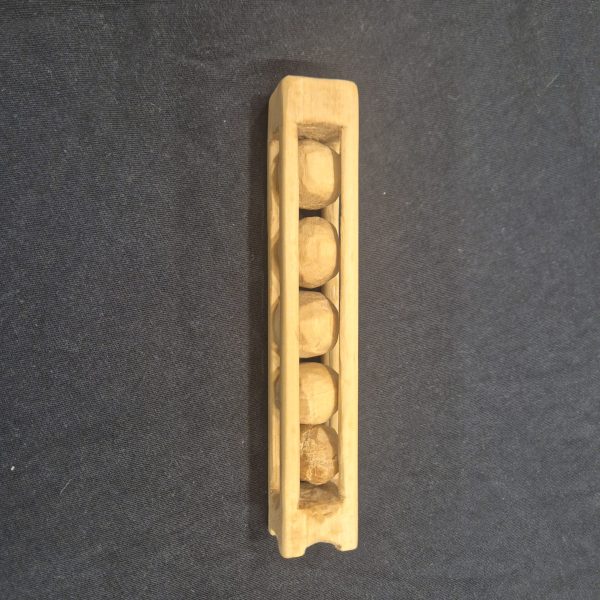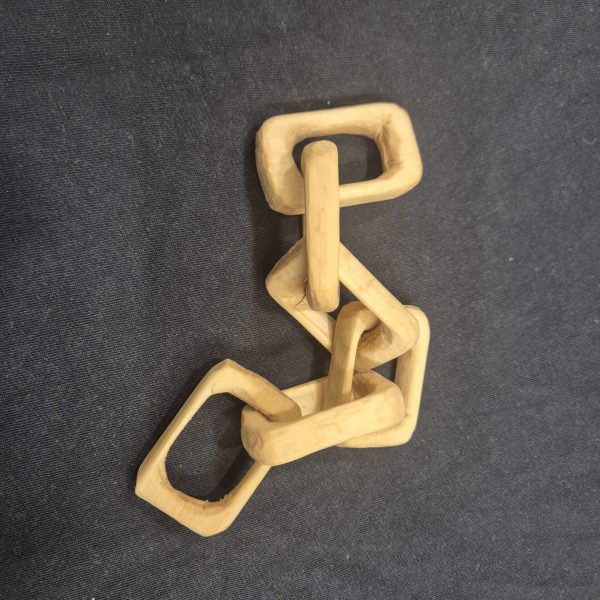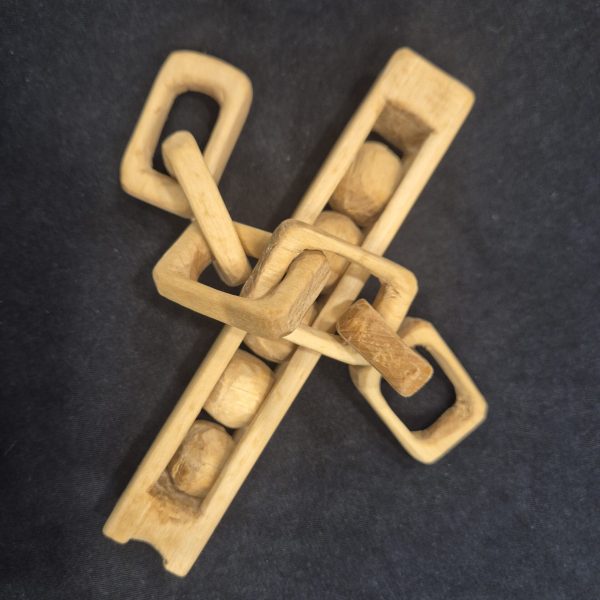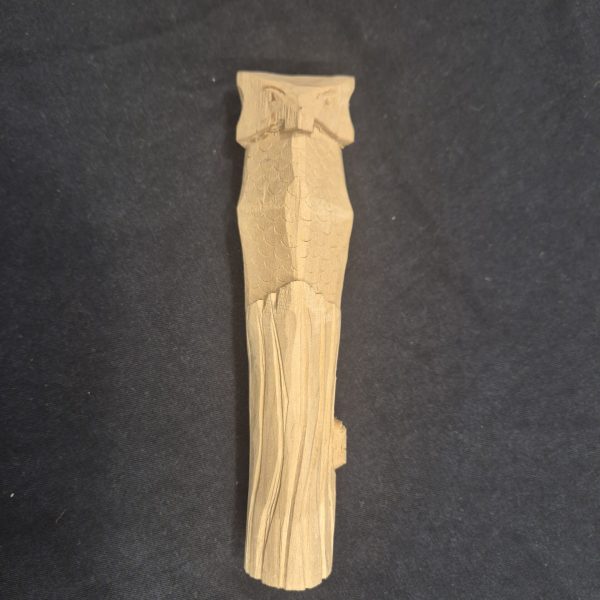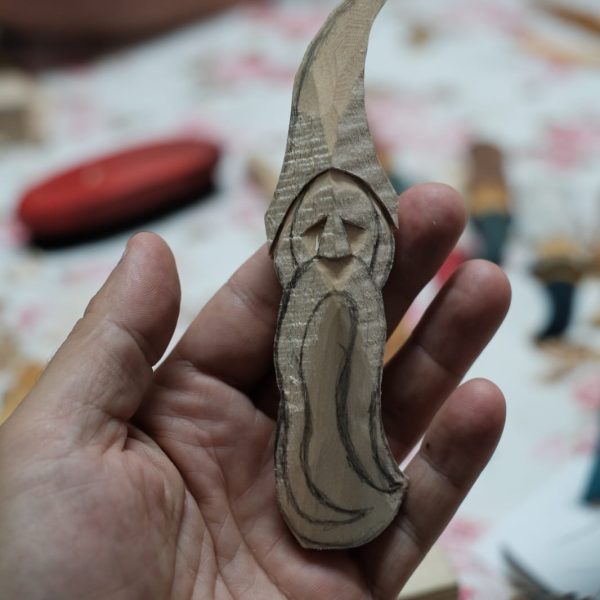
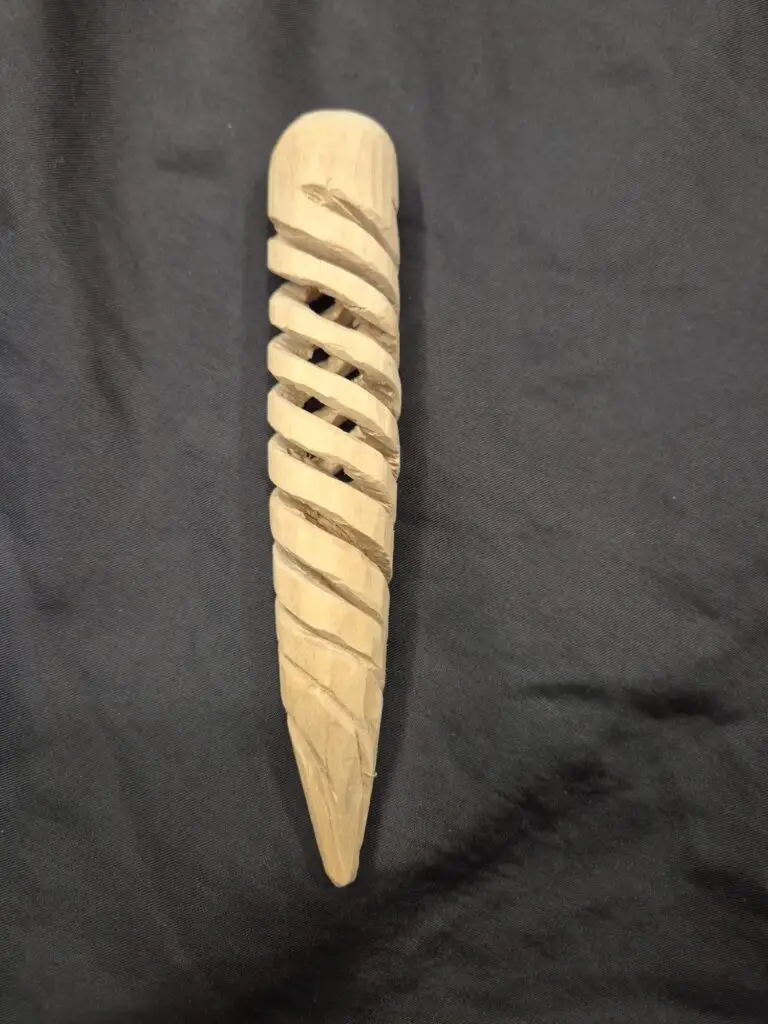
I was working on a delicate hollowing out of a spiral piece. If you’ve ever tried to carve a “hollow spiral,” you know the stakes are high – one wrong move and the thin, intertwined ribbons of wood snap like dry pasta.
I was eager. I could see the light through the center of the wood, and I wanted to finish that “impossible” hollow core. I felt my hook knife starting to drag just a little, but I didn’t want to break my flow. “Just a few more shavings,” I thought.
Instead of a clean, surgical scoop, the dull edge caught on a fiber and broke the delicate spiral. I had to stop, glue it carefully, and put it aside for now, knowing that it will never look perfect – no matter how many hours I put into it in the future. I was trying to sand away a mistake that a sharp blade would have never made in the first place. I was working twice as hard to produce something half as good.
The Pivot: AI Magic vs. Dull Preparation
This “bruised” and broken spiral immediately reminded me of a project I was recently involved in: a new AI implementation. Like everyone else these days, we were swept up in the excitement. We had a plan, a grand vision for an AI-improved process, and a very strong belief in “AI magic”.
Because we were so “action-oriented,” we decided to move fast. We skipped the tedious prep work – the data analytics, the granular mapping of current workflows, and the deep-dive stakeholder interviews. We rushed straight into execution, essentially trying to carve a masterpiece with a dull carving knife.
Not surprisingly, we hit a “knot” in the wood. The AI didn’t have the correct structure, it didn’t deliver as expected, the flows weren’t flowing, and the team didn’t have the clear requirements to guide the build. We reached a glorious, grinding halt. We had to do the one thing every craftsman hates: stop, go back to the beginning, and finally sharpen our tools. We had to restart with detailed requirements, a clear design, and structured steps – all the things we thought we were “saving time” by skipping them in the first place.
The Workman’s Tips
In wood carving, “sharpening the saw” isn’t a distraction from the work—it is the work. Here is how to keep your project tools sharp:
-
- Respect the “Honing” Phase: Before you cut, ensure your requirements are razor-sharp. If a requirement is “fuzzy,” your final product will be too.
-
- Don’t Mistake Speed for Progress: Rushing into execution with dull data or unclear roles is just “reckless carving”. It’s much easier to plan ahead than to try and glue a “broken” budget back together later.
-
- Check Your Edge Frequently: Just as a carver stops every few minutes to strop their blade, a PM should check in on the project’s health. Are your “pencil marks” still visible, or has the daily chaos blurred your vision?
The Closing
I learned the hard way that a dull tool actually costs more in the long run—more effort, more time, and a result that never quite reaches its full potential.
Have you ever rushed into a “shiny” new technology project only to realize your foundational tools were dull? How did you pivot?
Let me know in the comments—I’d love to hear how you sharpen your tools before the shavings start flying!