
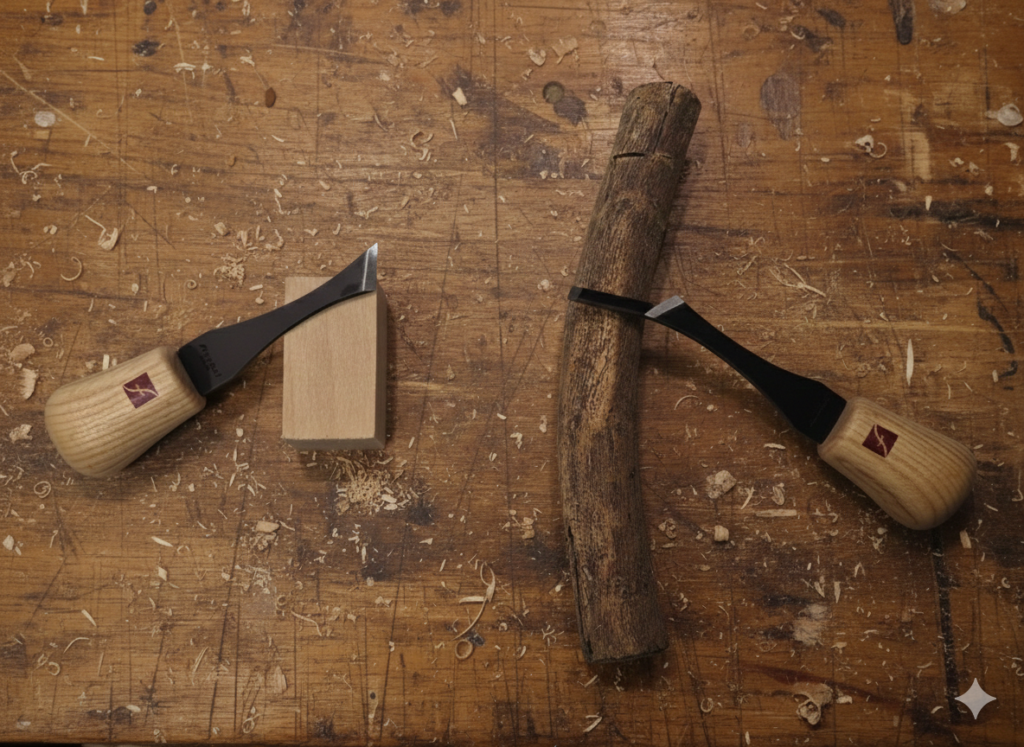
There is a specific, grounding scent that fills the room when you first set a fresh block of wood on the workbench. If it’s Basswood, it’s faint and clean—a blank canvas waiting for the lightest touch of a detail knife. But if you’re working with Oak, the wood feels like a physical challenge before you’ve even made your first cut.
Right now, my “workbench” is covered in spreadsheets and slide decks rather than wood shavings. I am in the thick of annual and quarterly planning, and as a manager of several teams – including a team of project managers – the stakes feel high. I’m looking at the year ahead, trying to allocate the right projects and the right tasks to each person.
I know from experience that the correct fit creates a smooth process and personal growth. But a misfit? That causes struggle, pain, and splinters that will be felt for days afterward. It is exactly like standing in the lumber yard, realizing that selecting the right “wood” is the most critical step for the next project.
The Pivot: Timber is Your Team
In management, we often treat “resources” as interchangeable units on a Gantt chart. We see a “Developer” or a “Project Manager” and assume they can be plugged into any initiative regardless of the “grain” of the task.
But just as you wouldn’t use a delicate whittling knife on a hardwood log , you shouldn’t assign a high-speed, “Agile” specialist to a project that requires the slow, meticulous precision of a multi-year infrastructure overhaul. Choosing your timber – your team – is the most strategic decision you make before the “shavings” start to fly.+2
If you pick a team that is too “soft” for a high-pressure environment, they may crumble under the blade. If you pick a team that is too “rigid” for a creative, pivoting environment, you’ll spend all your energy fighting the grain instead of making progress.
Workman’s Tips: Strategic Resource Planning
Before you begin your next “cut” of quarterly planning, consider these three tips for selecting the right material:
- Audit the Hardness: Match the personality of the project to the temperament of the individual. Is this an “Oak” project (durable, high-stakes, requires heavy lifting) or a “Basswood” project (needs agility, fine detail, and quick iterations)?
- Check the Grain: Every person has a “natural direction” in which they work best. Some excel at the “Rough Cut” phase of a project where big chunks of work are moved quickly , while others are masters of the “220-Grit” finish where the final 10% of closing details are handled with care.+3
- Plan for the Offcuts: Not every project uses 100% of a person’s “timber.” Look for ways to use “offcuts”—the leftover time or specific niche learnings—to fuel smaller side projects or professional development.
Final Thought
As a manager, it’s important to remember that people are not just inanimate blocks of wood; they are living trees. Unlike a piece of lumber, they can grow in different directions, develop new skills, and strengthen existing ones.+1
It is your task—and your privilege—to nurture that growth. By placing them in the right “soil” and giving them the right “carving” challenges, you help them evolve. Your project’s success isn’t just about the final product; it’s about the health of the tree you’re helping to cultivate.
As you look at your plans for the next quarter, are you assigning tasks based on who is “available,” or based on the “grain” of your team’s talent?
I’d love to hear how you match people to projects—drop a comment below and let’s discuss!


One Response
Check post